Showing posts with label Victorian Reading Challenge. Show all posts

Monday, February 15, 2021

Victorian Reading Challenge 2021

It's never too late to sign up for another challenge, is it? Once again, I'm signing up for the Victorian Reading Challenge at Becky's Book Reviews. Last year my Victorian reading was surprisingly low -- only ten altogether, including two rereads, two neo-Victorians, and two non-fiction. Hopefully this challenge will increase my Victorian reading this year. 

There are two participation levels. I'm signing up for the advanced level, four to six books over eleven months. There are themes every month and I'm sure I can find books to fit most of them. Ideally I'd love to read mostly books from my own shelves. I still have more than a dozen unread Victorians, below.


Here are the monthly themes:

January/Feb: Adaptations: Any book that's been adapted to movies or TV, or that should be adapted. (Will probably skip this one as I'm running out of time.)

February/March: Love & Marriage: The Doctor's Wife by Mary Elizabeth Braddon -- I've already finished this one, review to follow this week!

March/April: Journeys and Travels: Something by Isabella Bird, a renowned Victorian woman traveler. Or The Bertrams by Anthony Trollope. He also wrote some travel nonfiction, so that's a possibility too.

April/May: Second Chances. Give a book or an author a second chance. Something by Mrs. Oliphant, or The Real Charlotte. Might also read one of Trollope's Irish novels.

May/June: Favorite Author, New-To-Me Book. Again, Mrs. Oliphant, Trollope, or Hardy.

June/July: Nonfiction: Period Piece by Gwen Raverat, or A London Family by Molly Hughes.

July/August: Names as Titles: Marcella by Mrs. Humphrey Ward, or one of several books by Trollope: Ralph the HeirThe MacDermots of Ballycloran; The Kellys and the O'Kellys; Harry Heathcote of Gangoil. 

August/September: Back to School: something you were assigned at school, or think should be assigned. I wasn't a lit major so the only Victorian novels I read in school were Great Expectations, Jane Eyre, and The Mill on the Floss. I loathed The Mill on the Floss so maybe I should give it another go and see if I appreciate it more as an adult? 

September/October: Crime or True Crime: Lots of great true crime stories about the Victorian period! I have at least seven or eight on my TBR list. Maybe Murder in the First-Class Carriage by Kate Colquhoun or Murder by the Book by Claire Harman.

October/November: Home and Family: East Lynne by Mrs. Henry Wood; The Clever Woman of the Family by Charlotte Yonge; or A London Family. 

November/December: Comfort Reads: A London Family or Trollope.

Super-Bonus Theme: Bearded Victorians. I suppose this means read anything by a bearded Victorian?

Charles Dickens

Wilkie Collins

Anthony Trollope

So - those are my possible reads. Any suggestions for other Victorians? And which author has the best beard? 

Thursday, May 21, 2020

Hester: A Novel of Contemporary Life by Mrs. Oliphant


I counted the other day and I still have more than thirty unread Virago Modern Classics on my TBR shelves (though technically, some of them are not VMC editions). I'm desperately trying to take control of the TBR shelves, so Margaret Oliphant's Hester: A Novel of Contemporary Life was my pick for the May/June prompt of the Victorian Reading Challenge (long titles or sub-titles). 

First published in 1883, this is the story of two strong women in the fictional town of Redborough. The Vernon family name is synonymous with banking and stability, and in the beginning of the novel, a scandal erupts about 30 years prior -- John Vernon, head of the bank and the grandson of the founder of the Vernon family bank, has fled the country, and rumors are flying around town that there's about to be a run on the bank (if you've ever seen It's A Wonderful Life, you know exactly what this means: word is out that the bank doesn't have the funds and is about to collapse, so everyone rushes to the bank to get out their money before it's gone). 

Mr. Rule, the chief clerk, goes to Mr. Vernon's home in desperation, and he's nowhere to be found. His young and flighty wife insists that he'll be back soon, and offers the clerk all the money she has in the house, about 20 pounds. Instead, Mr. Rule does the unthinkable -- he approaches Mr. Vernon's cousin Catherine, a spinster, who is a shareholder but has naturally never been involved. Catherine is naturally concerned and with her funds and brains, she saves the bank, restoring the family name, and thus the town's revered and powerful benefactor. 

The story then jumps forward to the 1880s, and John Vernon's widow (known as Mrs. John), is returning to Redborough after the death of her husband. Mrs. John moved Abroad and joined her husband after she was forced to give up her beautiful home in the wake of the banking scandal, and she hadn't returned since. Now living in genteel poverty, she returns to the scene with her teenaged daughter Hester, who was born much later and knows nothing about this embarrassing episode or her father's role in it. She and her mother move into the Vernonry, a great old house that Catherine Vernon had converted into multiple dwellings, normally offered to impoverished relatives. All of them are living off Catherine's generosity, but most of them are bitterly resentful and disparage her whenever they can. 

Unfortunately, young Hester gets off on the wrong foot with Catherine, who calls on her mother late on the first evening of their arrival. Hester doesn't realize how important a benefactress Catherine is, and is rather rude and protective of her mother, and from this day forward, she and Catherine don't care much for one another. Catherine finds Hester standoffish, and Hester is influenced by the cutting remarks about Catherine by her neighbors, who are a kind of Greek chorus of frenemies. The only neighbors who seem thankful and benevolent are Captain and Mrs. Morgan, who related to Catherine's later mother, and are not technically Vernons. 

Things in Redborough are fairly uneventful until Hester turns nineteen and blossoms into a lovely young woman, attracting the notice of two of her distant cousins, who have been chosen by Catherine to succeed her in running the bank -- the dull but handsome Harry, and the hardworking Edward, handpicked by Catherine as her surrogate son and heir. Harry is in love with Hester, but she's not interested, and Edward is attracted to her but can't risk incurring the wrath of Catherine, who has never liked Hester. Meanwhile, the Morgan's grandson Roland arrives, on the lookout for new investors in his stockbroking business, and Edward thinks this may be his chance to finally become independent of Catherine.


I really liked this novel -- it's fairly long, almost 500 pages, but I really got invested in the plot and the characters. I got so caught up in the story I finished it in only four days. A couple of the characters reminded me a bit of Jane Austen -- Roland's sister Emma shows up, desperate for a husband, and I found her somewhat like Lucy Steele from Sense and Sensibility, though she's not nearly as malicious.  It was nice to have a Victorian novel with strong women characters. Margaret Oliphant clearly had some ideas about working women, and expresses them through Hester's frustration:

"I thought you hated Catherine Vernon," Roland cried.
"I never said so," cried Hester; and then, after a pause, "but if I did, what does that matter? I should like to do what she did. Something of one's own free will—something that no one can tell you or require you to do—which is not even your duty bound down upon you. Something voluntary, even dangerous——" She paused again, with a smile[Pg 7] and a blush at her own vehemence, and shook her head. "That is exactly what I shall never have it in my power to do."
"I hope not, indeed, if it is dangerous," said Roland, with all that eyes could say to make the words eloquent. "Pardon me; but don't you think that is far less than what you have in your power? You can make others do: you can inspire . . .  and reward. That is a little highflown, perhaps. But there is nothing a man might not do, with you to encourage him. You make me wish to be a hero."
He laughed, but Hester did not laugh. She gave him a keen look, in which there was a touch of disdain. "Do you really think," she said, "that the charm of inspiring, as you call it, is what any reasonable creature would prefer to be doing? To make somebody else a hero rather than be a hero yourself? Women would need to be disinterested indeed if they like that best. I don't see it. Besides, we are not in the days of chivalry. What could you be inspired to do—make better bargains on your Stock Exchange?"

Margaret Oliphant was one of the most prolific Victorian authors,  probably the most prolific women author of the era. She published her first novel in 1849, when she was just 21, and published more than 120 novels, supporting her family after her husband's death in 1852. Like many Victorian women authors, only a few of them are still in printthough there are quite a few on ebook, and many are free through Project Gutenberg. I've now read six of her novels so far -- Hester; The Mystery of Mrs. Blencarrow, I've read three of her Carlingford Chronicles, Miss Marjoribanks and The Rector and The Doctor's Family, two novellas in one volume. Virago Modern Classics reprinted the rest of the series and I'm tempted to track those down as well. 

Tuesday, March 3, 2020

Les Miserables, Book Two: Cosette; and Maison Victor Hugo in Paris

The Battle of Waterloo by William Holmes Sullivan
Two volumes done, three to go! I'm making real progress with Les Miserables, one of the books that's on my TBR shelves the longest. I've read 500 pages so far and completed two volumes. 

The second volume of Les Miserables begins with an extended description of the Battle of Waterloo. Talk about back story -- this section goes on for nearly fifty pages and at the very end, in the last three pages, we finally discover how it relates to the rest of the book! The awful Thenardier, the innkeeper who takes custody of Cosette, arrives on the scene as a thief, scavenging from the bodies on the battlefield. Nice.

Then we jump back to what's happening with Jean Valjean, now serving a prison sentence on another galley ship -- but not for long! He manages to escape by faking his own death after saving a sailor's life. He then retrieves some money and makes his way back to the Thenardier's village so he can rescue little Cosette from those monsters who are treating her like a slave. The scene where they finally get away from Thenardier is one of the most satisfying I have read in a long time. 


Jean Valjean and Cosette make their way to Paris, where they live quietly in seclusion for awhile, until Jean suspects he's being watched. They escape in a very exciting sequence, and wind up in a secluded walled garden which turns out to belong to a convent with a girl's school conveniently attached. In one of those amazing coincidences so beloved by Victorian writers, the elderly gardener is Fauchelevent, the very man whose life was saved by Jean Valjean back in Vol. I, which aroused Javert's suspicion to his true identity. Fauchelevent swears he will help Valjean with anything, and they arrange to smuggle Cosette out of the garden in a basket, so they can bring her back to the school through the front door. 

However, the conundrum is how to sneak Valjean out of the garden and back inside semi-legitimately as Fauchelevent's brother and new assistant gardener. In another amazing coincidence, one of the nuns has just died and it is her dying wish to be buried (illegally) in the vault of the chapel. Conveniently, the convent now has an empty coffin which needs to be filled with something and buried to avoid suspicion. It was no surprise that the plan succeeds, with some suspenseful plot twists.

This volume had a lot of twists and turns, and great plot development. However, it also included with some very detailed and long asides about both the Battle of Waterloo and the convent where Cosette and Valjean end up. I ended up listening to much of this on audio so I didn't mind the history and asides, but I cheerfully admit that my mind wandered during the extended action scenes. I'm really enjoying this book, but boy, it could have used some editing.

And now for some photos of Paris! 


Fountain in the square of the Place des Vosges in Paris 
Back when I lived in Germany, we were very lucky to be close to the border of France -- less than an hour's drive for an easy day trip, but even better, there was an express train to Paris from the nearest town. From my village train station, I could make it to Paris in less than four hours. If I booked far enough in advance sometimes it was as little as $80 for a round-trip ticket. Needless to say, I made the trip quite a few times. 
Portrait of Hugo on display at the Maison
On my second trip I decided to visit the home of Victor Hugo which is now a free museum, Maisons Victor Hugo (there's a second museum in Guernsey). It's in the Place des Vosges, a beautiful square in the 3rd Arrondissement, not far from the Place de la Bastille. Hugo lived at #6 Place Royal (now Place des Vosges) from 1832 to 1848. I hadn't read any of his works when I visited but the  museum is quite interesting. It includes a lot of his possessions from his entire life, including his writing desk and the bed in which he died, plus portraits of Hugo and some of his own drawing -- I hadn't realized he was also an accomplished artist.

Hugo's writing desk. He wrote standing up. 
It's definitely worth seeing if you're in Paris and if you're curious about writer's homes, as I am. I've been to several, including Jane Austen, Dickens, Hemingway, Ann Frank, and Goethe. I'd also love to go to Yorkshire and see the Bronte parsonage and the home of Elizabeth Gaskell. And now that I live on the East Coast I'm hoping to go up to the Berkshires and visit Edith Wharton's home.

Bloggers, do you enjoy visiting writer's homes? Which ones should I visit in the U.S.? 

Wednesday, February 26, 2020

Les Miserables by Victor Hugo: Book One, Fantine


So I've decided to take the plunge and make another attempt at Victor Hugo's epic masterpiece, Les Miserables. At 1260 pages (depending on the edition), it's quite possibly the longest book I've ever read! (I'm not sure if it's longer than War and Peace, it's tough to say based on different editions. It's definitely longer than Gone With the Wind and anything by Dickens or Trollope.) 

Since the book is so long, I've decided to write blog posts after each of the five books. The first book, Fantine, took me just about a week to finish. If you don't know the setup, here's what's happened so far:

The book begins in the 1820s, and begins with a lot of back story about a priest, Monseignur Bienvenue, who only appears in this section but is a pivotal character. (He is saintly and allows a newly released convict, Jean Valjean, into his home for the night. Valjean has spent 19 years doing hard labor onboard a galley ship after stealing a loaf of bread (his initial sentence was five years, but was extended after repeated escape attempts). Valjean steals the family silver and uses this to start a new life, eventually working his way up to become a successful businessman and the well-respected mayor of a town about five years later. Meanwhile, one of the factory workers, the beautiful Fantine, has left her illegitimate daughter Cosette in the care of the unscrupulous Thenardiers, who take Fantine's money and spend it on their own children, treating little Cosette like a servant.


Cosette's nasty co-workers discover where she's been sending her weekly wages, and get her fired from her job. She then sinks to selling her hair, then her teeth, and finally her body on the streets. Finally one day she is arrested for assaulting a man on the street when Valjean (now known as  Monsieur Madeleine) witnesses the event and stops the policeman Javert from throwing her in jail. Fantine health is wrecked and he takes charge of her care, promising to reunite her with Cosette.

Meanwhile, Javert has become suspicious -- he believes Mayor Madeleine is a former convict who is wanted for thefts after his release. However, Javert tells Madeleine his fears were averted when another man is arrested for the crimes. Madeleine realizes another man may be sentenced for his crimes and struggles with the decision to come forward. And that's only the first 200 pages!

There is A LOT going on in this book -- plot, characters, setting (Hugo loves detailed descriptions), and many asides in which Hugo pontificates about politics, philosophy, religion, etc. This seems to be a feature of books of the time -- I remember Moby-Dick included entire chapters about chowder and the color white. I've heard there are entire chapters in Les Miserables about the Paris sewer system, so that'll be . . . interesting. (Fun fact: you can take sewer tour in Paris -- there is an actual sewer museum! Apparently it's closed at the moment for renovations, so if you're planning a trip, you're out of luck). Also SO MUCH back story about the characters -- Monseigneur Bienvenue was the reason I gave up my first attempt reading this a few years ago. 


Anyway, I'm really enjoying it so far, despite all the asides. I've been lucky enough to find a digital download of the audio from the library, so I've been able to make real progress while walking the dog and driving around town. The audio version is the Charles Wilbour translation from 1862, and I like it so far. It's the same translation as the Modern Library hardcover edition, also checked out from the library. I do actually own two other copies of this book, but it's easier to keep reading the same edition. I also own the beautiful Penguin clothbound copy and the Signet mass-market paperback, both pictured. I love the Penguin copy but it's actually easier to read the Modern Library version, as it lies flat when open. The Penguin and Signet editions are also different translations. I'm sure they're equally good but I find it easier to just stick with one -- maybe someday I'll go back and reread the others to see which one I like best!

I'll be posting more thoughts about Les Miserables in the coming weeks -- I'm hoping to finish one section every week, so if all goes as planned I'll finish up by the end of March. I'm also going to include some travel photos related to Paris and Victor Hugo, and various adaptations.

Bloggers, have you read Les Miserables? Which edition is the best? And what are the longest books you've ever read?

Sunday, February 16, 2020

Man and Wife by Wilkie Collins


Victorian sensation fiction is SO MUCH FUN. If you read a Victorian sensation novel you are guaranteed many, if not all, of the following:
  • Secrets
  • Scandals
  • Swooning
  • Brain fever
  • Wildly unbelievable coincidences
  • Death by heartbreak
  • Misunderstandings
  • Mistaken identities
  • Wills, forged and legitimate
  • Adultery
  • Bigamy
  • Illegitimate children
  • Murder
and just general bad behavior in Victorian times. They're generally pretty long (in order to fit all this in) but they aren't difficult reads and they are absolutely worth reading. 

So. Man and Wife starts with two proper young Victorian ladies, aged about 18, on board ship. They are the dearest of schoolmates and vow to be friends for life. One of them, Blanche, is en route to India, where she eventually meets and marries a titled aristocrat; the other one, Anne, winds up in Italy, where she becomes a celebrated actress and singer.

Flash-forward 24 years later. Anne has returned to England from abroad and has married a younger man, Vanborough who is no longer as besotted with her as he once was. He's a social climber, and realizes that his wife is holding him back. He starts gallivanting about the county without telling anyone he's actually married, and finds a rich woman who would help him break into society and quite possibly, a successful career in politics. 


Vanborough finds a clever attorney who finds a loophole in their marriage paperwork: since they were married in Ireland by a priest, and Vanborough wasn't Catholic, the marriage is not technically valid. He uses this as an excuse to leave his wife and young daughter (also named Anne) and start a new life. His former wife eventually dies of heartbreak, leaving her daughter in the care of her old friend Blanche, now Lady Lundie. 

Flash-forward again, about 12 more years. The younger Anne is now governess and best friend of Blanche's daughter, also called Blanche. Both her parents have died, and she lives with her widowed stepmother, the second Lady Lundie. Blanche II and Lady Lundie are hosting a weekend party one summer at their estate in Scotland, and two of the guests include Arnold Brinkworth and his best college mate, Geoffrey Delamayn. Arnold is a stand-up guy and is trying to work up the nerve to declare his love to Blanche and make her an offer. He's very different from Geoffrey, who can't be bothered to pick up a book and is something of a bounder, a ne'er-do-well; however, he's the best rower in Oxford, and once saved Arnold from drowning. He is also, coincidentally, the second son of Sir Geoffrey Delamayn, the somewhat unscrupulous lawyer who helped Anne's father slither out of his marriage to her mother. 


History begins to repeat itself with poor Anne Silvester, who just can't catch a break. She's caught up in a scandalous relationship and is trying to make it right, and everything seems to go wrong and spiral out of control, involving her best friend Blanche, Blanche's swain Arnold, and even Blanche's Uncle Patrick, the heir to her father's title and head of the family. Much of the action takes place in Scotland, and if you've ever read of Gretna Green, (a famous destination in Pride and Prejudice), you will learn more than you ever anticipated about Scottish marriage laws. 

Like most Victorian sensation novels, Man and Wife is a real rollercoaster of a book, with many of the elements listed above. However, this book took a darker turn toward the end with the real threat of domestic violence, which I wasn't expecting. It does have some very funny moments, where the omniscent narrator injects some wry comments. Also, I particularly enjoyed the character of Sir Patrick Lundie, Blanche's uncle, who is the voice of reason in the book but also dryly amusing. I really enjoyed this book and after a bit of a slow start, I raced through more than 600 pages in a week because I just had to find out what happened next. This is my seventh novel by Wilkie Collins so far, and I really think this one is my favorite. 


There are at least five more books by Collins that I still haven't read: The Frozen Deep, Basil, Hide and Seek, The Dead Secret, The Evil Genius, and Jezebel's Daughter. They all sound really scandalous and over the top, I can't wait to read them all.

I'm counting this as my second book for the Victorian Reading Challenge, for the Love & Marriage category. I'm also counting it for my 19th Century Classic for the Back to the Classics Challenge. 

Thursday, January 30, 2020

The Time Machine by H. G. Wells


I was racking my brain to think of a novel for the Journeys and Travels category for the Victorian Reading Challenge when I thought of The Time Machine by H. G. Wells -- seriously, what could be a more fantastic journey than traveling through time? Though I'm not much of a science fiction reader, I really enjoyed my last foray into H. G. Wells, The Invisible Man. I'd been putting off this one because I saw the 1960 film adaptation as a child and it scared the bejeezus out of me. 

Published in 1895, the story is narrated by an anonymous man who meets a mysterious scientist at his gentleman's club. As a group of men are sitting around waxing philosophically, a scientist, known only as the Time Traveller, describes his theory of time travel. Of course they scoff at his ideas, but accept his invitation to see the machine. The narrator and a few other men accept an invitation for the following week, but when they arrive at the Time Traveller's home, their host is absent. They begin dinner without him and are shocked at his dusty, haggard appearance when he finally arrives. Gulping his food like a starving man, he recounts a fantastic tale of traveling thousands of years into the future, to a world now populated not by humans but by the peaceful, beautiful Eloi. Things seem idyllic until the Traveller realizes things are much darker and more dangerous than he realized at first, and he is soon fighting for his own existence. 


After a slow start, I raced through the book, which was much better than I expected, and rather different than the film version that I remember from years ago. It's short, only about 100 pages in most editions, and can easily be read in a single sitting. (I actually read most of it off my phone which I downloaded for free on iBooks). What surprised me most was how much Wells emphasized the environment and the future of mankind, so far ahead of his time. He also made some serious points about class warfare, which comes to an extreme in the book. 

It's quite a page-turner and I loved the ending, which I found very poignant, and I'm very glad that I finally got around to reading it. I don't know if I dare watch the 1960 film version again, or even the 2002 adaptation starring Guy Pearce. The effects in the first version are probably pretty cheesey to modern viewers, but I'm very squeamish about horror movies. I'm pretty sure the newer version is even scarier. I'm not a huge sci-fi person but I know it's iconic. 

And just for fun, here's a clip from a very funny episode of Big Bang Theory, in which Sheldon has a bad dream about time travel after purchasing a movie prop time machine. There's a bit of a spoiler in it, so don't watch it if you don't know the big twist from the novel. 


I'm counting this as my Genre Classic for the Back to the Classics Challenge, and as my Journeys and Travels novel for the Victorian Reading Challenge.

Monday, January 13, 2020

2020 Victorian Reading Challenge


Becky at Becky's Book Reviews is hosting another Victorian Reading Challenge and the way she's organized it is so fun and interesting I can't pass it up. There are two levels: the basic level is quarterly, just read one Victorian every three months -- easy peasy! The advanced level is still pretty easy, with eleven themed months and one bonus theme. And there's a lot of flexibility with the months, which is great since so many Victorians are real doorstoppers.

Here are the themes and some possible books that would fit the challenge:


JANUARY/FEBRUARY: Journeys and Travels: The Time Machine by H. G. Wells (can also count this as my Genre Classic for the Back to the Classics Challenge).


FEBRUARY/MARCH: Love and Marriage: Man and Wife by Wilkie Collins. Sounds super-dramatic and sensationalist, which is always fun.


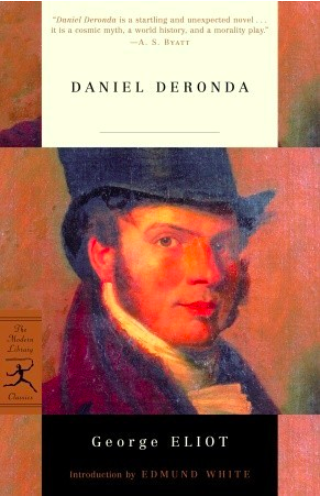
MARCH/APRIL: Second Chances. Maybe Daniel Deronda by George Eliot (I can also count this for my Abandoned Classic for the Back to the Classics Challenge). I got stuck about halfway through, maybe I should watch the miniseries and it will inspire me to actually finish the book. Or Les Miserables if I can finish it in time.


APRIL/MAY: Names as Titles: Victorian authors named a lot of books after people! Maybe Basil by Wilkie Collins or a bunch of others by Mary Elizabeth Braddon. There's also The Real Charlotte (also from my Back to the Classics list!)


MAY/JUNE: Long Title or Long Subtitle. How about Harry Heathcote of Gangoil: A Tale of Australian Bushlife ? That's a long title, even for Anthony Trollope. There's also The Struggles of Brown, Jones and Robinson by One of the Firm and The Golden Lion of Grandpere. All of these are fairly obscure and there's not a single decent cover image online for any of them. At least they're all fairly short for Trollope.


JUNE/JULY: Adaptations. The Woodlanders by Thomas Hardy. There's a movie adaptation with Rufus Sewell, need I say more?


JULY/AUGUST: Favorite Authors, New-to-Me Titles.  Probably Elizabeth Gaskell, there are a few novellas and minor works that I haven't read yet.


AUGUST/SEPTEMBER: Back to School: I didn't have many Victorians assigned in college and high school, which is why I've been reading so many as an adult. My choices are pretty limited so I'd have to go with Jane Eyre or Great Expectations. Or maybe The Awakening by Kate Chopin -- I didn't read it in school but I think it should be included in school curriculum.


SEPTEMBER/OCTOBER: Crime or True Crime. There are so many great nonfiction books that fulfill this category. I've been meaning to read The Five by Hallie Rubenhold.


OCTOBER/NOVEMBER: Home and Family. Period Piece by Gwen Raverat, a memoir of her Victorian childhood (she was a granddaughter of Dickens); also A London Family, an omnibus by Molly Hughes. I've read the first volume but never got around to finishing the last two. I meant to read both of these last year for the TBR Pile Challenge but didn't finish that one either.

NOVEMBER/DECEMBER: Comfort Reads. Pretty much anything by Anthony Trollope fits this category, or maybe Mrs. Oliphant. I loved Miss Marjoribanks and would love to read more in her Carlingford series.


SUPER-BONUS: Bearded Authors. How to choose? I think Trollope has the most impressive beard of the Victorians. Maybe that's a good month to read his biography.


Anthony Trollope
Anyone else signing up for this challenge? What other Victorian novels and novelists do you recommend? And which novelist has the best beard?