Showing posts with label mid-century. Show all posts

Tuesday, July 5, 2022

Paris in July: The Martha series by Margery Sharp


I thought I'd start Paris in July with a short, fun book. Margery Sharp's Martha in Paris fit the bill perfectly -- only 166 pages and it was one more I could cross off my owned-and-unread pile. However, when I bought this at Strand Books several years ago I didn't realize it was second in a series. Naturally I would need to read them in order, so I had to track down the first book and buy that one too, though it's set in London, not Paris.


Published in 1957, The Eye of Love is the first book of the Martha series. Set in 1932, it begins with Martha's aunt, who was christened Dorothy Hogg but now goes by the name of Dolores Diver. Miss Diver, on the wrong side of 30 and fading, has just been left by her longtime lover Mr. Gibson, who is about to become engaged to the daughter of an associate, in order to preserve his failing furrier business. Times are hard and during the Depression, furs aren't selling well. Mr. Gibson and Miss Diver are despondent, but there's nothing to be done. He must leave his Spanish rose to marry an annoying woman he doesn't love. The least he can do is pay the lease on their love-nest through the end of the year, and give her all the contents which they've accumulated.

Miss Diver is also the guardian of her orphaned niece Martha, now ten years old and obsessed with drawing -- so much so that she basically eludes school and spends all her time sketching trees, stoves, and anything that catches her fancy. One day while sketching a tree she meets Mr. Phillips, who is looking for new lodgings, and he becomes their boarder, but soon suspects Miss Diver has some money and decides to make a play for her. 

I love this pulp novel cover - so dramatic! 


Meanwhile, Mr. Gibson has merged his business with the charming and steadfast Mr. Joyce, his future father-in-law, and they soon develop a deep friendship -- much more so than with his future wife Miranda. He cannot bear the thought of marrying her instead of Miss Diver but doesn't see any way around it. Coincidentally, Mr. Joyce, a lover of art, also encountered young Martha while sketching and sees that she has talent. Naturally all the stories converge, and without going into too much detail, I'll only say that it's witty and charming and has a very satisfactory ending. 


I really enjoyed it and was also enchanted by the sequel, Martha in Paris. The story has jumped forward and Martha is now eighteen. Mr. Joyce is now Martha's patron and decrees that she MUST study in Paris. Martha is still obsessed with her drawing and resists at first, but then sees the advantages and begins studying art while staying with a widow and her daughter. She's very focused and is oblivious to everything else -- in once instance, she doesn't even realize that while sketching in the Tuileries Gardens, the nice young Englishman named Eric sitting next to her is asking her out on a date. In a very amusing turn of events, she turns his invitation to Friday night dinner with his mother into an opportunity for a really good bath in their renovated English-style tub. 

This book is equally witty and charming and surprisingly feminist for its time (first published in 1962). Martha is portrayed as an artist completely focused on her work, but she actually struck me as someone who today might be considered on the autism spectrum. She's completely obsessed with drawing and art, and really bad at picking up at social cues. I'm no expert but if the book were published today I think readers would really speculate about that. 

This cover is just SO WRONG it's laughable. 
Martha wouldn't be caught dead in stockings and black pumps.
It's so bad I had to include it. 


My one tiny quibble about this book is that if the first book starts in 1932, the second would be set squarely in WWII and the French occupation of Paris. There is not a single mention of this and people are traveling back and forth over the Channel from England,so clearly, this book is set in an alternate universe in which the war never took place (but now I'm nitpicking).

I don't want to give away too many details for fear of spoilers, but Martha in Paris ends on such a cliffhanger I absolutely had to find out what happened next, and I found a online copy of the final novella, Martha, Eric and George online and read the whole thing in a couple of hours. If I gave any but the loosest setup it would absolutely spoil the plot of the second book. The third books picks up immediately after the end of the second, and after a couple of chapters, jumps forward ten years later with Martha as a successful artist who has to finally deal with the fallout of her actions in the end of the second novel. I loved the third novel as well as the first two but I do think it ended rather abruptly. 

I love this retro cover.


Like the second novel, it's also very feminist for its time (1964). Like Martha, author Margery Sharp was very successful and focused on her work. I also wonder if Martha's devotion to her work was a reflection of Sharp's own feelings about women working. I'm guessing some people will find Martha unsympathetic but if she'd been a man no one would have raised an eyebrow at her absolute dedication to her work and confidence in her talent. 

I've now read a dozen of Margery Sharp's books for adults (she also wrote the Rescuers children's series adapted into two animated Disney movies.) I've really enjoyed all of them and I'm happy to report many have been reprinted, including six recent paperback editions by the Furrowed Middlebrow imprint of Dean Street Press. The DSP editions are available on Kindle for around $3 or $4 US, a real bargain, and I'm sure I'll be downloading some of them soon. 

Tuesday, June 28, 2022

The Feast by Margaret Kennedy

Cover of a 1969 reprint. This one is pretty much perfect.

So, how is everyone's summer reading going? Anyone in the mood for a beach read that turns out to be full of death and destruction? The Feast by Margaret Kennedy was reprinted last summer and WOW. I put it on my Christmas list last year and saved it to read until this summer. If you're looking for a summer read that packs a real punch, this is it. 

Published in 1949, this is basically a morality tale that tells you upfront that people are going to die -- this is NOT a spoiler, it's the setup. The book begins a prologue: the annual meeting of two friends, a minister in Cornwall and his summer visitor (they're hardly in the book, so their names are not really important). They normally begin the visit with an evening of chess, but the host needs to put off their game in order to finish a sermon for the following day -- a eulogy for a group of people who tragically perished when a cliff collapses on top of a summer resort, leaving nothing but a massive pile of rubble. 
However, we do know that there were some survivors among the resort's guests -- but who? 


The copy of my edition.
Nice, but I don't think it really reflects the setting of the book. 

The book then jumps back seven days and describes the final week of the resort and its inhabitants. Set in 1947, the Siddal family are struggling to make ends meet in their ancestral home on the Cornish coast and have converted it to a boarding house, not so much a hotel. Mrs. Siddal is trying to make a go of it but her husband has mentally checked out and doesn't lift a finger, hiding in a room under the stairs. Her three grown sons help but are ready to leave the nest. There are also some servants including Miss Ellis, a snobbish, gossipy housekeeper and Nancibel, the loyal housemaid. Then there are the guests, including two families, the wealthy Gifford family with four children; the Coves, with three; an unhappy couple, the Paleys, who are grieving for their dead daughter; plus an obnoxious clergyman, his put-upon daughter Evangeline; and a late arrival, a bestselling author and her chauffeur. It's almost like an Agatha Christie novel, but instead of a murder, it's a natural disaster, and the reader has to work out who will live and who will die. 

The original 1949 cover. Good, but I like the 1969 cover better. 


This book took a bit for me to get into, but after the first few pages, I was hooked. It's divided up by the seven days of the final week for the resort, and each has many short sections (too short to really call chapters) covering the many characters in the book. And there are a LOT of characters, more than twenty. Some of the children are really minor characters, but it didn't take long to keep everyone straight. They're mostly really well developed and the plot got me completely engrossed, so I was able to speed through it quickly -- it's more than 400 pages long, and the last day I read almost the last hundred pages in a single sitting. It is THAT GOOD. 

A French edition from 1956


Towards the end I began to have a terrible sense of foreboding -- of course the reader already knows that disaster is looming but there is a lot of foreshadowing. I absolutely had favorite characters and I was dreading the end because I'm always worried if someone I like will be killed off. If you want hints about the plot and the outcome, feel free to read the introduction which gives some very strong hints. I have given up reading introductions because of spoilers so I was blown away by the ending. I am glad that I did go back and read it because there was some subtext that I had definitely missed. 


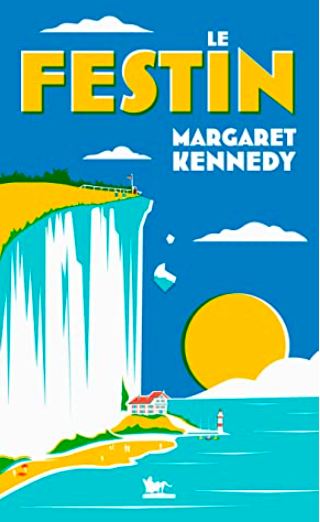
A new French reprint. Good, but a little too cheerful for what's inside the book.

This is an absolutely brilliant book and I know it will be one of my top reads of the summer, if not the entire year. I've only read one other book by Margaret Kennedy, Troy Chimneys, which is also good but very different from this one. Several of her other books are still in print including her other most famous book, The Constant Nymph, which I also own and will definitely move up on the to-read pile. 

I'm counting this as my Classic Set In A Place You'd Like To Visit for the Back to the Classics Challenge. It's also the first read for my Big Book Summer Reading Challenge.

Monday, May 30, 2022

The World My Wilderness by Rose Macaulay


No civilization had lasted for more than a few thousand years; this present one, called western culture, had had its day and was due for wreckage, due for drowning, while the next struggled inchoate in the womb of the ensuing chaos, till slowly it would take shape and have its day. That day was unimaginable; it would be what would be; but already the margins of the present broke crumbling and dissolved before the invading chaos that pressed on.  

Published in 1950, The World My Wilderness is Rose Macaulay's penultimate novel, just before her most famous work, The Towers of Trebizond. I'd been meaning to read this forever and was lucky enough to find a paperback Virago copy a couple of years ago, on the free book cart in the lobby of the Ramstein AFB library. I can spot a green Virago spine a mile away so naturally I snapped it up. 

Just after the end of World War II, British expat Helen Michel is living in the south of France, in a small town near the Pyrenees, with her 17-year-old daughter Barbary, and her young son, child of her second marriage to a Frenchman. Her husband Maurice, suspected by many as being a collaborater, has died under mysterious circumstances, and Helen is living a quiet existence in their house, Fraises, when her oldest son arrives from Cambridge. After a visit, he returns to London, taking his sister back to live with their British father and his new wife. Also joining them on the trip is Barbary's stepbrother Michel, now orphaned, to live with his uncle. Fifteen-year-old Michel and Barbaray have been running rather wild with the Maquis, French resistors. 

The original 1950 hardcover edition


Not surprisingly, the move to London does not suit Barbary very well. Theoretically she's studying art but is also continuing to be rather wild, exploring the bombed-out buildings with Michel and making some rather disreputable friends. Her father, a British peer, attempts to 'civilize' her -- or rather, her new stepmother Pamela does -- but Barbary can't be bothered to put on makeup or look like a lady, much less sit in boring drawing rooms. Things take a turn for the worse when Barbary accompanies the family on a trip to Scotland to visit an uncle, a psychiatrist who would like very much to analyze her. 

I liked this novel but for a short book, only about 250 pages, it was surprisingly slow. I expected to rush through it but it really isn't that sort of book. It's quite description-heavy and the characters are really well drawn. I was surprised that as early as 1950 an author recognized the psychological effect the war must have had on so many people, including the young, since I've always thought PTSD and wartime trauma was mostly ignored -- Barbary's British father and stepmother were clearly very stiff-upper-lip type of people. 

Really like this Dutch-language edition from 1968

Barbary in particular is a very interesting character, she's both old beyond her years and also extremely childlike. I was very worried that something terrible would happen to her wandering about bombed-out London buildings alone, (and it does) but not at all what I was expecting. I also think the name Barbary is a little heavy-handed but again, it was published in 1950 so maybe that was a subtle hint for its time. 

I also quite liked the twist ending which I was not expecting at all. Overall, a very enjoyable book and an excellent summer read. 

This is my sixth book for the TBR Pile Challenge.

Thursday, April 21, 2022

1954 Club: Who Was Changed and Who Was Dead by Barbara Comyns


Within a few weeks funerals were to become a common occurrence in that village; but at this time they were rather scarce and looked forward to eagerly.

I've read several books by Barbara Comyns and was delighted to find out one of them had been published in 1954 -- perfect for Simon and Kaggsy's 1954 Club event. Even better, I found out my local library had a copy of this book, a weirdly twisted take on village country life. 


Set in Warwickshire during the early part of the 20th century, the story begins with a flood so high that ducks are swimming through the windows of the Wildweed family home, a large household consisting of Ebin Wildweed; this three children, Emma, Dennis, and Hattie; the matriarch, Ebin's cantankerous mother; and two servants, sisters Norah and Eunice. The banks of the nearby river have overflowed into the house and caused havoc throughout the surrounding villages.

The ducks swam through the drawing-room windows. The weight of water had forced the windows open; so the ducks swam in. Round the room they sailed quacking their approval; then they sailed out again to explore the wonderful new world that had come in the night.


It's the beginning of June and the floodwaters soon subside. What follows that summer is slightly sordid and increasingly unsettling; quirky and eccentric behavior among the village residents turns dark, violent, and tragic. I should probably give more details about the plot but I don't think I can without giving too much away.

This book was a quick read, less than 200 pages in a smallish paperback format. I could have probably read it in one sitting, but I did have to take breaks because I found it a little creepy. I've read six of Comyn's books and they've all been darkly quirky in a similar way. 


Some of her other novels have recently been reprinted by Turnpike Books and also by Daunt books; I've already ordered one of them, Mr. Fox. A couple of her works are nearly impossible to find, hopefully the reprints will find an audience and the others will follow. 

Thanks again to Simon and Kaggsy for organizing this reading event! I'm hoping to read two or even three more novels so fingers crossed I'll get them finished and posted in time. 

Sunday, April 17, 2022

1954 Club: Jeeves and the Feudal Spirit by P. G. Wodehouse


It is both amusing and amazing to me that P. G. Wodehouse was able to recycle his own plots and characters over the course of his seventy year writing career. By my count, I've now read 25 of his works, as novels and short story collections. Wodehouse tropes abound in Jeeves and The Feudal Spirit. I'm always looking for an excuse to read more Wodehouse, and the timing couldn't have been better as I could count it for Simon and Kaggsy's 1954 Club!  It runs this whole week from April 18 to 24. 

Bertie Wooster and his valet Jeeves return for their eleventh adventure and with them some beloved returning characters and situations. Somehow Bertie just never learns to avoid young upper-class women who want to marry him and mold him into respectability, their jealous ex-fiancés who want to sock him, and devious aunts who want him to commit petty crimes. Naturally the faithful Jeeves with his superior brain power is there to save the day (and Bertie's skin).

In this installment, Bertie has been summoned to help Aunt Dahlia out of yet another scrape -- she's desperately trying to unload her women's magazine, Milady's Boudoir, to a wealthy publisher, and has enlisted Bertie to help wine and dine him, in London and at Brinkley Court, her country estate. She has also tasked Bertie with picking up a pearl necklace for her in London from a jewelry store. Little does Bertie know that Aunt Dahlia has made a cheap copy of some extremely valuable pearls, which she has subsequently pawned to infuse cash into her insolvent periodical. She is in a panic because her husband Tom is planning on showing off the pearls to another weekend guest, Lord Sidcup, a supposed expert of antiques and jewelry.

Hugh Laurie as Bertie Wooster and Nicholas Palliser as Stilton Cheesewright from the 1993 TV adaptation, the episode entitled "The Delayed Arrival." Jeeves does not approve of Bertie's mustache.

Bertie is also in the soup, so to speak, because the Brinkley Court guest list includes Florence Craye, a strong-willed young writer who has managed to entangle the unwitting Bertie into an unwanted engagement. She's on the rebound after jilting her overbearing fiancé, D'Arcy "Stilton" Cheesewright, who has appeared to have it out with Florence and wring Bertie's neck. It also includes the aforementioned publisher, Trotter; his social-climbing wife; and his stepson, Percy Gorringe, a playwright who is adapting Florence's novel for the stage, and is madly in love with her. 

You always know what you are getting with Wodehouse, and therein lies the charm. I don't really want to time-travel to aristocratic England between the wars, but it would be amusing to be a fly on the wall and observe the hapless Bertie in all his slapstick charm. It honestly doesn't bother me that Wodehouse recycles plots and character types -- they're so beautifully drawn and so funny, just the thing if you need a light read, and who couldn't use some diversion right now? 


And now time for a little bonus Wodehouse! If you like musical theater, I strongly recommend watching the upcoming TV broadcast of Anything Goes, airing in the US this May on PBS Great Performances. It had a short run on the big screen in US theaters in March and I was lucky enough to go see it. It's a professionally shot recording of the 2021 West End production starring Sutton Foster (currently starring on Broadway in The Music Man). Wodehouse co-wrote the original book, lyrics by Cole Porter. The plot is classic Wodehouse, about wacky characters on an ocean liner in the 1930s. There are mobsters, star-crossed lovers, a ridiculous English lord, and an American cabaret singer, giving ample opportunity for hijinks and great musical numbers. It was an absolute joy to watch and I can't wait to watch it again. I suspect I'll save it on the DVR so I can watch the fabulous tap dancing numbers again and again. 

Here's the preview from Youtube: 


So -- my first read for the 1954 Club! I have two or three more I'd like to read for this event, hopefully I'll get through them all. What are you reading for the 1954 Club?

Monday, March 21, 2022

The Mountain Lion by Jean Stafford: An NYRB Classic with a Dark Twist

Detail of "The Shower" by William Herbert Dunton. 
The original is in the American Museum of Western Art in Denver, Colorado

The Mountain Lion is one of several unread NYRB Classics that have been accumulating on my TBR shelves. I've probably owned it for a good ten years and it seemed like a good choice for the TBR Pile Challenge. I try to mix up my reading with different genres and it seemed quite different than my previous read, plus it's short -- a good choice when I'm behind on my annual reading goal already! However, this book was nothing like I expected.

Published in 1947 but set about 20 years earlier, it is the story of a young brother and sister living in California, Ralph and Molly Fawcett. The book begins when Ralph, aged ten and Molly, eight, are anxiously awaiting the arrival of their Grandfather Kenyon, the stepfather of their widowed mother (so, technically, their step-grandfather). They live with their mother and two older sisters in a walnut grove in suburban Los Angeles, and their Grandfather's visit is the highlight of the year. Grandpa Kenyon is quite a character, a world traveler who owns various properties including a ranch in Colorado, managed by his son Claude, their mother's half-brother. 

Ralph in particular is stifled growing up among a lot of females, but ostensibly for their health, Ralph and Molly begin to spend extended trips on the ranch with Claude. Ralph's world changes as he leaves his repressed childhood in California to a heavenly freedom in Colorado, where he learns to ride and shoot and fish. 

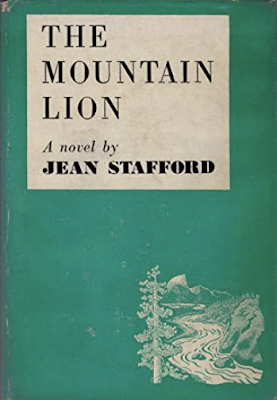
The original 1947 cover.
I love the illustration, like a reverse woodblock print. 


This seems like it could be a wonderful and ideal way to spend summers, but it's not ideal for Molly, who is precious, awkward, and bookish. It also takes a rather darker turn as they begin to grow older. What at first appears idyllic is actually not. Jean Stafford is masterful at describing life, both on the ranch and in California, but she doesn't leave out any details, including butchering animals and a really grotesque incident of self-harm. The characters are really well-drawn, but none of them are particularly likable; however, I absolutely had to keep reading to the ending which left me gobsmacked and very unsettled. My edition had a forward by Stafford with a major spoiler so I should have seen it coming -- I was still rather shocked but if you want to be completely surprised, I'd skip it.

Having read the forward, I had an overwhelming sense of dread. It actually reminded me a bit of the film The Power of the Dog, -- not so much the plot, but they're both Westerns set in the 1920s with dark undertones. I actually saw it the theater a few months ago and it's a great movie but it made me deeply uncomfortable because I knew something dreadful was going to happen. If that is the type of story that puts you off, I would probably not read The Mountain Lion. I gave it four stars on Goodreads (there is some racism besides the disturbing parts) but I don't think I would read it again. 

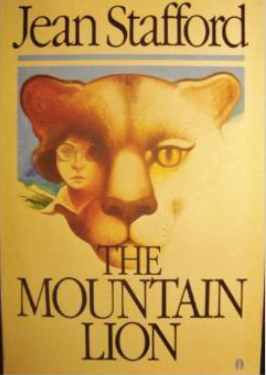
From the 1983 edition. This cover is SO 1980s!


Jean Stafford won the Pulitzer Prize in 1970 for her Collected Short Stories, and a couple of other novels. I'm not sure if they're as dark as The Mountain Lion but her writing is very good and at some point after I've recovered from this one I might look for them later.

This is my fifth book for the TBR Pile Challenge.

Wednesday, January 19, 2022

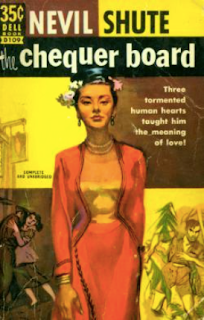
The Chequer Board by Nevil Shute

I am very behind with my reading already this year -- normally by this time I've read at least four or five books, if not more. I really needed a fast read to get me inspired, so I turned to one of my most reliable authors, Nevil Shute. I think this is the eighth book by Shute that I've read, and I've mostly enjoyed all of them. They might not be considered great literature, but he is a great storyteller, and normally I can hardly put his books down.

Published in 1947, The Chequer Board is the interweaving story of four WWII soldiers who are linked together after surviving a plane crash. They're all assigned to the same hospital ward and the most seriously injured, John Turner, suffers a very serious head wound, and his eyes are bandaged. While convalescing, the other three, previously unknown to Turner or each other, all read or talk to him, to help him recover. Several years after the war, Turner begins to have side effects from the head wound, and upon consultation, learns that shell fragments have been left behind in his brain, which are inoperable, and he has about a year left to live. 

Two of the three in the ward were also crash survivors, and the third was a Black American GI. One of the crash survivors was one of the pilots, who was very racist and snobbish to the Black American. The other three -- Turner, the American, Dave Lesaurier, and a third crash survivor -- are under guard together because they're awaiting court-martial, accused of various crimes. Turner has always wondered about the other three men in the ward with him, and decides to use the time left to try and track them down and see what happened to them. 

So, the story goes back in forth in time between the wartime experiences of the three men, and Turner's search for the them, which takes him all around England as far as Penzance, and all the way to Burma. (Another book about Cornwall! The universe is obviously telling me to go there).

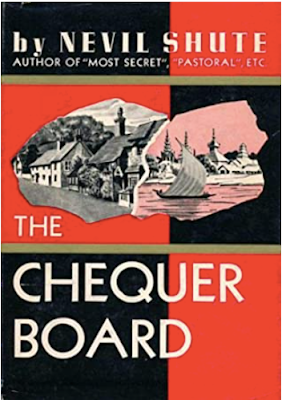
This pulp paperback cover is . .  . something

There's a lot about race relations and prejudices in this book, both with the racist pilot, Morgan -- who ends up living in Burma, to the chagrin of his mother (the reader can see where he got his prejudices) and also with the Black GI, Dave Lesurier. It was very interesting to me to see how Shute was trying to explore racism and race relations in the UK at the time, and I honestly can't imagine an American writer of that era attempting the same. Those two stories were my favorites in the book, though there are quite a few racial slurs repeated, including the N word, which is so infuriating. The story is trying really hard to make the point that white people need to get over it and look past color, but Shute kept throwing the word in, which was pretty frustrating. There's also some sexism which made me roll my eyes.

Overall though, the message about getting along is pretty strong, and there are some great characters and development. In particular I liked learning how the residents of a small town in Cornwall supported a group of Black GIs. I know racism is still a big issue in the UK but it was nice to see someone in the 1940s pointing out how the Black GIs were treated better in England than they were at home. 

I also really enjoyed reading about Burma, which I briefly visited years ago on a trip to Thailand. That section of the book was very reminiscent of A Town Called Alice, one of Shute's best-known books, though that one is set in Malaysia. There are at least seven or eight more books by Shute I still haven't read, and I look forward to reading them all.

This is my first book for the TBR Pile Challenge.

Sunday, December 13, 2020

The Street by Ann Petry


Streets like the one she lived on were no accident. They were the North's lynch mobs, she thought bitterly; the method used to keep Negroes in their place. And she began thinking of Pop unable to get a job; of Jim slowly disintegrating because he, too, couldn't get a job, and of the subsequent wreck of their marriage; of Bub left to his own devices after school. From the time she was born, she had been hemmed into an ever-narrowing space, until now she was very nearly walled in and the wall had been built up brick by brick by eager white hands.

I have often referred to books as Fascinating Trainwrecks -- about people who make one bad decision after another, rushing headlong towards disaster. They are often horrible people, yet so well written that I cannot stop reading (think Anna Karenina, and most of Zola). 

And then we have characters like Lutie Johnson in The Street by Ann Petry. Lutie, a young Black woman in the 1940s, works hard, scrapes, and saves, and does everything she's been taught to do to get ahead in life -- and she just can't catch a break. 

Set in Harlem during WWII, The Street is the story of Lutie Johnson, a young single mother living just trying to make a living for herself and her eight-year-old son, Bub. Bub's father left Lutie after months of her living in Connecticut, working as a cleaner for a rich white family. She only saw Bub and her husband once a month, if that, and sent them all her wages. The separation, and her husband's inability to find a job, was the death toll for their marriage, and Lutie needs to find a new place to live since she can't keep living with her father and his girlfriend, who are a bad influence on young Bub. 

This cover is sooo 1970s.  

The story begins with Lutie examing a dark fifth-floor walkup apartment that she can afford -- with a creepy landlord named Jones. Right away I knew he was trouble, he made me SO uncomfortable. I'd actually started reading this in the summer but Jones gave me such a bad feeling I stopped for several months. I'm glad I got the courage to keep reading about Lutie, because her story is so compelling. 

We learn the back story of her marriage and separation, and how she manages to land a civil service job. But Lutie is desperate to move to a better apartment, in a better neighborhood, away from Jones and some of the other sketchy residents of the building, like the Mrs. Hedges, the Madam on the first floor who watches everyone coming and going, and keeps offering to introduce Lutie to men who would appreciate her friendship, so to speak.

Things finally seem to be looking up for Lutie when she starts singing to herself one night in a crowded bar, where she's gone for a much-needed break and a beer. A good-looking but slightly sketchy-looking man named Boots asks her to audition to sing with his band. Lutie thinks this could be her break, but naturally, things don't work out as she hopes -- the conclusion takes a pretty shocking twist. 

The Street is Lutie's story, but it also interweaves the back stories of Boots, Mrs. Hedges, Jones, and some of the other characters. It's a tragic tale that really couldn't have turned out any other way, and it's not very optimistic for anyone who isn't white. It was published almost eighty years ago, but it feels very contemporary in the writing style, and it's a fast, absorbing read. 

 A 1954 edition

This book had been on my periphery for a few years, but I'd never really heard that much about it or about Ann Petry. It became a bestseller, and The Street was the first book by a Black woman to sell more than a million copies. Nevertheless, there are less than 8,000 ratings for it on Goodreads -- compared to more than 250,000 for Their Eyes Were Watching God and 150,000 for Invisible Man. I don't know why this doesn't get the attention it deserves. Parts of the story must have been shocking when it was published in 1946, but Bigger Thomas in Native Son is worse, an actual trainwreck. Lutie does everything she can to pull herself out of a bad situation, and it still all goes wrong. It was so frustrating to read how she could not catch a break and had so little say in her own situation, by society and by individual people working against her.  

The trouble was with her. She had built up a fantastic structure made from the soft, nebulous cloudy stuff of dreams. There hadn't been a solid, practical brick in it, not even a foundation. She had built it up of air and vapor and moved right in. So of course it had collapsed. It had never existed anywhere but in her own mind. 

The Street is a masterful tale of the unfairness of life for women of color in the mid-century. And for many women just like Lutie, things haven't gotten much better. 

I'm counting this as my BIPOC classic for the Back to the Classics Challenge.

Monday, October 19, 2020

1956 Club: Madame Solario by Gladys Huntington, and some book covers

A first edition dust jacket. 
Those bare shoulders seem more 1950s than Edwardian.


I was really ambitious for Simon and Kaggsy's recent #1956 Club -- I had a stack of books published that year that I was determined to read, mostly from my own shelves. I did finish four of the five, though I only had time to blog about two of them. I had also started another, a Persephone called Madame Solario. However, it was a bit of a slow read and 493 pages long, I knew I wouldn't finish it during the specified period. But I finally finished it last week and thought I'd review it anyway. 

Published anonymously in 1956, Madame Solario is set in the fashionable resort town of Cadenabbia on Lake Como in northern Italy, in the summer of 1906. The book, which is divided into three parts, begins with the arrival of a young Englishman, Bernard Middleton, who is spending the summer on the continent before settling down in a banking career chosen for him by his family. He is supposed to meet friends who have been delayed, but decides to stay when he is drawn into the society of other expats vacationing in the same hotel. At first he is drawn to the beautiful young Ilona, whose heart is being broken by a Russian soldier, Kovanski. Bernard is disappointed by Ilona's sudden departure, but is soon enamored of the mysterious Madame Natalia Solario, a beautiful English woman with an absent husband. Her arrival turns the hotel into a bit of a turmoil. It seems there is some unfinished business with the jealously glowering Kovanski, and Bernard also learns of some scandals in Madame Solario's past. 

Beautiful endpapers in the Persephone edition


Bernard begins a tentative friendship with Madame Solario, but the viewpoint of the book shifts in the second part with the arrival of Madame Solario's brother, Eugene Harden, who is apparently the source of the mystery in his sister's past. The hotel guests become suspicious of their close relationship, and rumors begin to spread. Bernard is hardly mentioned and it's very focused on Natalia (nicknamed "Nelly" by her brother) and Eugene. A lot of it is just mostly conversations between the two, or rather, just long rants by Eugene. The third part then shifts the focus back to Bernard and the pace really picks up before a very dramatic finish that left me gobsmacked.

According to the Persephone website, reviews of the novel compared to it Henry James crossed with Ivy Compton-Burnett or with Daphne du Maurier. I haven't tackled much by James but I am a fan of his contemporary Edith Wharton, and this feels a bit like a Wharton novel to me -- dissatisfied upper-crust people in Italian resorts are definitely an Edith Wharton setting, though the malevolent brother isn't typical of her work. 

Those people . . . they have the superiority of owing their good fortune to something they themselves had nothing to do with. And that is the superiority I envy! To be born with a sort of super-self, for that's what rank is, a super-self that planes over frontiers -- to be born thinking one has the right to look down -- hasn't that got more charm than anything one can do for oneself? (pp 198-199)

I liked this book, though the middle section, the longest, dragged somewhat. I found the relationship between Natalia and her brother disturbing. I don't want to give anything away but after reading it I'm not surprised that the author was anonymous for a long time. And the ending was . . . wow. I really, really wish I knew someone else who had read this so I could discuss it with them. Not a typical Persephone at all, but definitely worth reading. 

And lots of interesting book covers! 

A first edition, not very exciting. 


A Polish edition


Nice cover on this French edition, I think it's my favorite of the bunch.


Trashy paperback cover! Looks very 1970s but internet searches say 1950s paperback edition. 


 A Penguin reprint from 1956. She looks more like Eliza Doolittle here --
the correct time period, but not glamorous enough.


A Spanish edition, meh


An Italian edition, nice photo of Lake Como on the cover.

In 2012 Madame Solario was adapted into a French movie, currently available for streaming on Amazon Prime. I haven't watched it yet but I'm curious to know how they'll adapt this 500 page novel into a 90 minute film. I imagine just cutting out Eugene's tirades will save a lot of time. 


There was even an entire book published on the mystery of the anonymous author. Sadly it's only available in French.  


I'm counting this as my book set in Italy for the European Reading Challenge

Sunday, October 11, 2020

1956 Club: French Leave By P. G. Wodehouse


I've been reading a lot of P. G. Wodehouse lately and it occurred to me that it was very likely that he had published a book in 1956 that I could read for Simon and Kaggsy's 1956 Club! I depend on Wodehouse to cheer me up whenever I need a light read, and once again he came through with French Leave, a slight and amusing novel. 

This one digresses from the normal Wodehouse setting of London or the English countryside -- it's mostly set along the French coast, in fictional resort towns of Picardy and Brittany. The characters are primarily American and French and I don't think there's even a single English character which is very unusual for Wodehouse. 

But here's the setup. The book starts in America, on Long Island. The three Trent sisters, Kate, Jo and Teresa (known as Terry), are trying to make a go of a farm, selling eggs, milk, and honey, and having a pretty hard time of it. Conveniently, they have a windfall of $2000 each, and the two younger sisters, Jo and Terry, decide to risk it all on a trip to France, in search of millionaire husbands. Eldest sister Kate is aghast and is determined to go along as a chaperone. Jo and Terry will each pose as a wealthy American, with her sister playing her maid, for a month each. Jo goes first in Picardy but is unsuccessful and returns home; Terry continues to try her luck in St. Rocque.


Terry does meet up with some genuine millionaires, but she also meets the slightly shady and very broke Nicolas Jules St. Xavier Auguste, the Marquis de Maufringneuse et Valerie Mauberanne, also known as Old Nick. Old Nick is an impoverished French nobleman who prefers living off wealthy wives (he's had at least three), questionable business deals, and his son Jefferson, from his first marriage to a wealthy American. Jeff mostly lived with his mother in America but fought with the maquis, the French resistance, and has a dashing scar on his face to show for it. He's now a struggling writer who refuses to marry for money but is willing to help his father out of a tight spot. In return, Old Nick decides to set up his son with the delightful Terry Trent, whom he believes is loaded with American cash. 

Unfortunately this plot also includes spending time on a yacht with some other wealthy Americans, including Old Nick's second ex-wife Hermione Pegler, who believes that Terry is an adventuress (technically, she is) who will mess up her plans to marry off her niece Mavis. Mrs. Pegler wants to pair Mavis, a fizzy-water heiress, with Freddie Carpenter, another fizzy water millionaire (Mrs. Pegler owns considerable stock in both water companies, and hopes that a marriage between the two would be of financial and personal benefit). She thinks that Terry is after Fred's money, but Terry and Jeff are instantly smitten. The fact that neither of them has any money and assume the other one does leads to misunderstandings, tears, and a lot of physical comedic moments. This being a Wodehouse novel, everything comes right in the end. I can absolutely imagine adapted as a classic screwball comedy from the early 1950s. I recently watched Some Like it Hot and there are some elements that are similar -- wealthy Americans on yachts, husband-hunting, and characters climbing out of hotel windows.)

Not French, it's the historic Del Coronado Hotel in San Diego, California. It was the filming location for Some Like It Hot (which is actually set in Florida). 


I enjoyed French Leave, though it isn't a classic Wodehouse -- I think I've read 17 books by him so far, and I wouldn't count it among his best. There are some characters that seem superfluous, and some definite loose ends that are never resolved. However, it's a fun, short novel, and can easily be finished a day or maybe even one sitting (it would be perfect for a vacation read) -- preferably in a resort town on the coast of France. 

Thanks again to Simon and Kaggsy for hosting this event, can't wait to do it again next time!