Showing posts with label nonfiction. Show all posts

Thursday, April 15, 2021

1936 Club: The Other Day by Dorothy Whipple


I love books written in the inter-war period; I love memoirs; and I love the middlebrow author Dorothy Whipple, so One Fine Day checks off so many boxes for me! It is the perfect read for Kaggsy and Simon's 1936 Club. 


Born in 1893, in Blackburn, Lancashire, Whipple was the eldest child of what would be eventually a large family of seven children. She seemed to have a mostly idyllic childhood, though there would be heartaches. Young Dorothy especially loved the countryside and was fascinated by stories and folktales from a young age. 

. . . the tales Kate told us got mixed up with the tales I told myself, so I could not sort them out, and walking over the wet roads between the low black stone walls and looking out to the far splendid hills with the cloud-shadows going over, I felt a deep satisfaction that the world should be so full of tales, of things that had happened and were happening. Anything seemed possible in those days, and I should not have been at all surprised if a great antediluvian beast had appeared among the browsing cows in the field, or if Mistress Nutter had overtaken us on a broomstick.

However, schools for girls in the early part of the century were spotty, and Dorothy had some pretty horrific school experiences -- a particularly nasty math teacher was constantly berating her, and at one point she's accused of plagiarizing a short story she'd written, which is so infuriating! (Obviously, her talent for writing began at a young age, since the teachers didn't believe a child could have written such a good story.


Finally her father decided to send her to a convent school, which he announced casually at the dinner table. 

It was at meals that we mostly saw him. Vital changes in our young lives have been announced to the accompaniment of knives and forks clattering on plates, the gurgle of water being poured from glasses, and requests for more bread from unconcerned parties. While being helped to vegetables one's dearest hopes would fall between dish and plate never to be recovered, or on the other hand, one would be raised to the seventh heaven of delight by some promise made while waiting for the pudding to come in.

The news of Dorothy's new school came as shock but she grew to love it, though it was difficult as a Protestant in a school run by a Belgian order of nuns, with nearly all Catholic classmates. Naturally there are some funny and embarrassing school anecdotes. 

A 1950 paperback edition cover

The book really only includes Dorothy's childhood, up to the age of twelve when the family moves permanently to the countryside. Of course Whipple was only in her forties when she wrote the memoir, but I would have loved to learn more about her coming-of-age and her life as a writer. Before The Other Day, Whipple had written four novels and a book short stories, which doesn't include some of her most popular works. 


I've been a Whipple fan since I read The Priory, one of my very first Persephones, and it's thanks to Persephone that I have a pretty big collection of of her work, nearly every book in print and out of print. Nearly all of them are reprinted by Persephone, but not this one, and I'm sorry to say that copies are scarce and quite spendy when they do come on the market. I did pay rather a lot for this one, though not nearly as much as I've seen recently. I really do hope Persephone or one of the other publishers reprints this little gem! 

And thanks again to Kaggsy and Simon for organizing the 1936 reading week, it's been so lovely reading about all the wonderful books published that year. 

Friday, January 29, 2021

All Creatures Great and Small by James Herriot


I've been a big fan of British/PBS television series for years, but somehow, I missed watching All Creatures Great and Small. I guess I was the wrong demographic when the original series came out in the 1980s -- it was something my grandparents watched, and definitely Not Cool Enough. I've shelved the series of memoirs at the library often enough to know them by sight, and I'm quite sure I'd have never got round to reading or watching it until the new series reboot started a couple of weeks ago. 

But I'm always looking for good audio books for my daily walks and I was able to download the first in the series a couple of weeks ago. If you're not familiar, it's the memoirs of a young country veterinarian in Yorkshire as he navigates his way in his first job as an assistant vet in a rural practice in the 1930s. Young James Herriot (the pseudonym of James Alfred Wight) is newly qualified and desperate for a job. He had always planned on working with small animals, but James jumps at the chance to work for the dashing yet slightly eccentric Sigfreid Farnon, who has recently purchased a practice in Yorkshire. 


The book is a series of short chapters, each detailing amusing, poignant, and sometimes sad stories of his work in his first year as a veterinarian, treating cows, horses, various livestock, and sometimes pets. The reader is introduced to some colorful local Yorkshire characters, farmers and gentry, including Mrs. Pumphrey and her spoiled but loveable Pekingese, Tricki-Woo; and also some possible love interests, including the beautiful Helen Alderson. 

The audiobook is beautifully narrated by Christopher Timothy, and I didn't realize until I was nearly finished that he played James Herriot in the original series! He does a great job with the accents different voices, and I liked it so much I listened to the entire book on audio instead of rushing through it and reading the print volume which I got from the library as a backup. I often have a print or e-book copy of an audio and alternate. Often, I get really caught up in a story and wind up reading the print copy instead of taking the time to finish the audio. But I liked the audio so much I forced myself to be patient and listen. I was a little surprised that he didn't use a Scottish accent for Herriot but maybe that was too much for an entire audio? In the new series Herriot is definitely using a Scottish accent, but it makes sense as the actor is in fact from the Highlands. 


Nicholas Ralph as James Herriot, with an adoring co-star.


And about the new series. . . well, it's beautifully filmed and I love seeing all the animals, but I already have some quibbles since I'd read most of the book before I started watching. We've only had three episodes air here in the U.S. but I'm already annoyed with some of the changes they've made, both with the plot and the characters. I'm sure I'll watch all eight episodes, but I'm already hoping that the original series didn't make as many changes. I did love the book and am already on the library waitlist for the next in the series. It's perfect reading for difficult times and I suspect I may finish all the books in the next few months.

Monday, December 21, 2020

The Dancing Bear by Frances Faviell; and a trip to Berlin


I love the Furrowed Middlebrow reprints and though I prefer print books when I can get them, I've been tempted more and more often by the instant access to e-books. The entire Furrowed Middlebrow catalog are available on Kindle and some of them are included with Kindle Unlimited. There's a promotion right now, 99 cents a month for two months, so I couldn't pass it up and downloaded two books by Frances Faviell, The Dancing Bear and Chelsea Concerto. Not realizing that these were nonfiction, and sequential,  I started with The Dancing Bear, Faviell's memoir of her life in Berlin just after the end of World War II. (A Chelsea Concerto is her memoir of living in London during the Blitz, and I actually should have started there).

The book begins shortly after Faviell, an artist, and her little son John join her husband in the British sector. The book begins with a chance meeting with a German woman, Frau Maria Altmann, who is struggling with a cart of goods at a busy intersection. Faviell is in her car but stops to help, and seeing the Union Jack, the local police stop traffic and passersby assist the woman, who is waiting for her son Fritz. Frau Altmann refuses the offer of a ride, since it is forbidden, but Faviell insists after Frau Altmann faints on the street. 

This marks the beginning of a close friendship between the author and a struggling German family during the difficult first years of the British occupation and the reconstruction of Berlin in a divided Germany. Frau and Herr Altmann are trying their best to hang on to their pre-war life, though they have hardly any food or fuel in a terrible winter. Their oldest son Kurt was sent to fight in Russia and hasn't been heard from in years, though they refuse to admit his death; oldest daughter Ursula is supporting the family working as a black-marketer; frail Lilli is a dancer with the ballet; and the youngest, Fritz, is rebellious and sulky. 

Faviell does what she can to help the family (along with her faithful and tender-hearted driver, nicknamed Stampie), but there are so many needy people and sick children, she is sometimes overwhelmed. But it's clear she made a huge difference in the lives of the Altmanns and others. 

. . . these women clung, in spite of all the horrors they had undergone, to the conventional -- or was it that they thought their only safety lay in the resumption of the conventional pattern of life? 

I liked this book but parts of it were hard to read, especially with the cold snap we had last week -- I couldn't help imagining a frigid winter with no heat and little to eat, poor shoes -- it must have been a terrible time. I suppose it wasn't the best timing to read it now, but sometimes I find that books about the war make me grateful for what I have.  

I was lucky enough to visit Berlin for a long weekend in 2018. It was actually my second trip there -- back in the 1980s, I spent a few weeks in Europe with my sister and we stayed with a German friend of hers in West Berlin when it was still divided. We were even able to cross the border into East Berlin for a day, which was rather eerie and a little scary. It's incredible how much it has changed since then. We had a wonderful time on the last trip and I wish I could have seen more. We managed to pack a lot into three days. 


The famous Checkpoint Charlie.
I actually crossed into East Berlin at this very spot back in 1985. 

Leftover reminder of the DDR


The iconic Berlin TV Tower from 1969. 
Sadly we didn't have enough time to go up and admire the view.


Berlin Cathedral


View from below of the spiral staircase at the Berggruen Museum.
I think we visited four museums in one day, five altogether that weekend.


The Memorial to the Murdered Jews of Europe


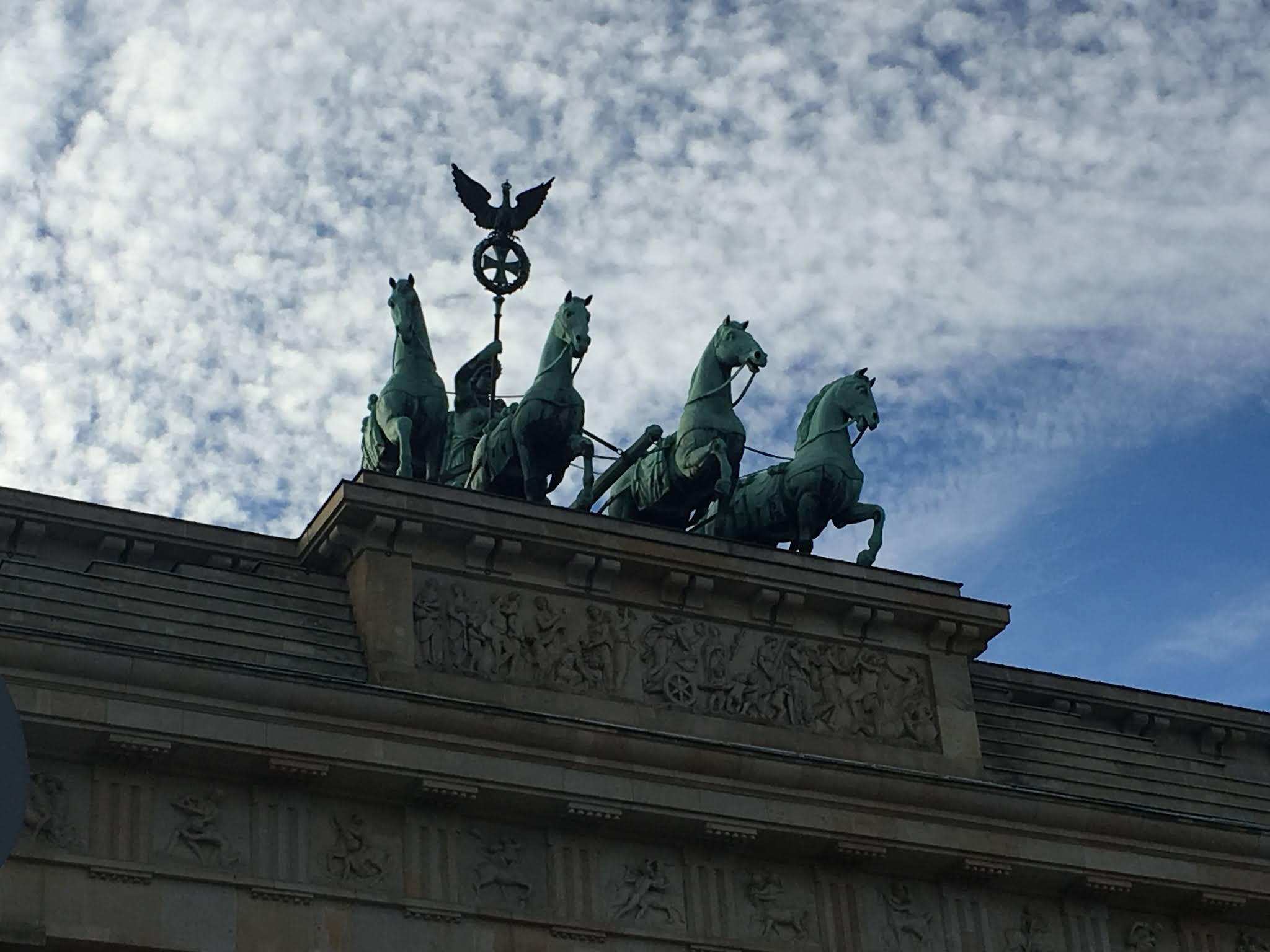
The Brandenburg Gate


A preserved section of the Berlin Wall, complete with graffiti, (obviously the Western side). 


I love finding decorative manhole covers. This one is like a tourist's guide.


I loved Berlin and wish I'd had more time there, it has so much history and culture. 

Parts of Faviell's book were a tough read, but I found it fascinating and hope to read more of her books soon. Next up for me will be A Chelsea Concerto, about her life in London during the war, then some of her fiction set in Germany. I'm signing up for a World War II reading challenge for next year so I'll definitely be reading some of them.

I'm counting this as my German book for the European Reading Challenge

Monday, June 22, 2020

The Warmth of Other Suns by Isabel Wilkerson


Despite growing up near Detroit, spending a decade of my life in Chicago, then spending another 16 years in the American South (Texas and Florida), my knowledge of Black history is pretty pathetic. I'm really trying to educate myself about BIPOC issues and authors, and dove into another Big Summer Book a couple of weeks ago. It's a fairly long book, more than 500 pages of text, but the stories are so compelling and the writing is so good that I could hardly put it down and finished it in less than a week.

The Warmth of Other Suns is the kind of history book I love, non-fiction that reads like fiction. Pulitzer Prize-winning journalist Isabel Wilkerson interweaves the narrative story of three different African-Americans who leave the South in the first half of the century, part of the Great Migration. From 1915 to 1970, approximately 6 million African-Americans left the South, migrating North and West, hoping for a better life for themselves and their families in states without Jim Crow laws. Wilkerson shares the stories of three people: Ida Mae Gladney, a pregnant sharecropper, stealthily leaves Mississippi in 1937 with her husband and two children to Wisconsin and then Chicago; George Starling leaves the orange groves of Central Florida in 1945 and becomes a Pullman porter based in Harlem; and surgeon Robert Foster leaves for California in 1953, since even his medical degree and experience as an Army doctor fail to protect him from prejudice and discrimination in his home state of Louisiana.

All three have very different stories, but they're equally absorbing and often horrifying. A neighbor of Ida Mae was nearly beaten to death when he's believed to have stolen some missing turkeys (who were merely roosting in a different part of the nearby woods). George tries to organize a strike of  fruit pickers working for pennies a box in dangerous conditions during the height of demand in WWII, and has to leave town after he hears a rumor he's about to be lynched. Dr. Foster works for years as a surgeon on a U.S. Army base in Austria, but he can't even find a motel for a night's rest as he drives for days on his Westbound route to California, even after leaving the South. Over and over there are stories of racial slurs, discrimination, and police brutality. Clearly, things haven't changed much.

Once they leave for the west and the north, all three still face discrimination, just less subtle. Practices of redlining prevent African-Americans from renting and buying, so they end up paying more for less, forcing them to live in crowded apartments and neighborhoods. Ida Mae and her husband are shut out of job after job. George Starling finally gets a backbreaking job as a train porter, but after years of service, is never promoted. Though a respected surgeon, Dr. Foster has to drive all over Los Angeles collecting urine samples for an insurance company to make enough money and contacts to set up his own practice.

The presence of so many black migrants elevated the status of other immigrants in the North and West. Black southerners stepped into a hierarchy that assigned them a station beneath everyone else, no matter that their families had been in the country for centuries. Their arrival unwittingly diverted anti-immigrant antagonisms their way, as they were an even less favored outsider group than the immigrants they encountered in the North and helped make formerly ridiculed groups more acceptable by comparison.

These incidents happened years ago, and it's still happening now. I'm appalled that I was never taught any of this in school -- and I grew up less than 30 miles from downtown Detroit. I didn't know that Chicago, a city in which I lived for almost ten years, is one of the most segregated in America, and has some of the most racist suburbs and the worst racial riots. I didn't know that one of the most racist cities in Florida was less than an hour from my in-laws retirement home, halfway between their house and Disney World. And I'd never heard of Juneteenth even though I lived in Texas for eleven years and my children were required by state law to take an entire year of Texas history. They were never taught it (and the Civil War was about the South "defending State's Rights." Some people still call it the War of Northern Aggression).

But this isn't about me, or my lack of education. I intend to from the real struggles and lived experiences Black Americans and other minorities are facing now and have been facing for years. I want to be a better reader and a better blogger, and read more books by BIPOC authors. I highly recommend The Warmth of Other Suns if you want to do the same. If you are looking for more suggestions, here is an anti-racist list by Ibram X. Kendi.

Monday, March 25, 2019

Margaret Mitchell's "Gone With the Wind" Letters, 1936-1939


One of the nicest perks of working in a library was getting first pick of the donated books for the semi-annual Friends of the Library sales. Gone with the Wind was one of my all-time favorites, so I was naturally intrigued by Margaret Mitchell's "Gone With the Wind" Letters, 1936-1949, and was happy to part with $1 for this edition from 1976. Of course it only took me five years to get around to finally reading it.

As the title indicates, this book is a collection of letters written by Margaret Mitchell regarding her iconic novel Gone With the Wind, first published in 1936 and famously adapted into a blockbuster movie in 1939. It's a really interesting chronicle of how GWTW exploded into an international phenomenon and affected Mitchell for the rest of her life, not to mention her husband and indeed the city of Atlanta. The letters are chatty and for the most part interesting, and it's quite fascinating to see how this novel became such as sensation. 

Margaret Mitchell was a born-and-bred Atlantean, and grew up hearing stories of the Civil War and Reconstruction. She was born in 1900 and attended Smith College and originally hoped to become a psychologist, but left college when her mother died suddenly and never graduated. She returned to Atlanta to keep house for her father and eventually got a job as a reporter for the Atlanta Journal in the early 1920s. After her marriage to attorney John Marsh, she suffered an ankle injury that didn't heal, so she was forced to quit her job. Spending months bedridden, she read nearly every book in the library and out of frustration, her husband brought her a stack of paper and a typewriter and told her to write her own novel, which she did over a period of about three years. 

The novel then lay unpublished in manuscript form for several years, until MacMillan editor Harold Latham came to town. Goaded by a braggart acquaintance who claimed her own manuscript would win a Pulitzer while Mitchell's would never be published, Margaret grabbed most of the envelopes with the manuscripts and gave them to Latham as he was getting on the train, so that "at least she could claim that she'd been refused by the very best publisher." She was given a contract and merely hoped that the publishers would make enough to cover their costs, never dreaming that it would be of interest to anyone but the most hard-core Atlanta fans and Civil War buffs. 

GWTW then became a massive success, winning the Pulitzer Prize and becoming one of the best-selling novels of all time. The book of letters was really interesting to me, to see her perspective and all the problems the attention from her book created, with fans constantly hounding her for autographs, other authors claiming plagiarism, issues from foreign publishers pirating the books, and then the whole circus that erupted after the movie adaptation was announced. It was an absolute circus, and I can't even imagine how much worse it would have been today with the internet and social media. Mitchell was basically hounded for the rest of her life, and never had time to write another book. With all the hullaballoo, I I'd be surprised if she weren't sick to death of it, not to mention the pressure she would have been under if she had written a second book. 

This book is very interesting to learn the context of the publishing and the movie adaptation, especially with the looming backdrop of WWII. There are also a lot of letters written to other authors that she enjoyed, mostly history but there are poets and other contemporary authors mentioned, including Betty Smith who wrote A Tree Grows in Brooklyn. I was also delighted to find a letter from 1946 to a writer from the New York Herald Tribune in which she requests the address of Angela Thirkell so that she can send her a holiday care package during the severe rationing in Great Britain after the war. She mentions how much she loves Thirkell's novels and is about to read Miss Bunting (#14 in the Barsetshire series, which I haven't yet read). 

For me, the collection of letters did rather slow down after the war years, I suppose because much of the attention toward GWTW had died down. The last letter included is from July 1949, just a few weeks before Mitchell's death after being hit by a drunk driver. The book ends after the last letter, without any mention of her death, or any biographical details, so I suppose I'll have to track down a biography, and of course I have to watch the film adaptation of GWTW, now that I've already re-read that book as well. 

But that's three books finished for the TBR Pile Challenge -- I still have a biography of Edith Wharton and a memoir by Elizabeth Jane Howard, so that makes four books by and about 20th century female authors for this challenge. 

Wednesday, February 13, 2019

Georgette Heyer: Biography of a Bestseller by Jennifer Kloester


I'm not much of romance reader, but back when I lived in Texas I read The Grand Sophy for my Jane Austen book club and was pleasantly surprised by how much I enjoyed it. Georgette Heyer wrote 50 novels, mostly historical. They're rather light and fluffy, but mostly great fun and they're very well researched. I was poking around Half-Price Books in San Antonio and found this biography, so I thought it would be a good addition to my TBR Pile Challenge list. Georgette Heyer wrote 50 novels. in 72 years. Starting when she was just 17, she published a book nearly every year of her life, sometimes more. Most of them were romances and historical fiction, but she also wrote mysteries and a few contemporary novels, and nearly all of them are still in print. 

Heyer's first novel, The Black Moth, began as a story she made up to amuse her younger brother, who suffered from hemophilia. She continued writing after her marriage to a mining engineer, with whom she moved to Tanganyika (now Tanzania) and Macedonia. They moved back to the UK and Heyer mostly supported the family with her writing while her husband made some career changes (he and her son both became lawyers). Heyer's commitment to research and her literary output are pretty astonishing -- her historical novel An Infamous Army is now considered one of the best historical works on the battle of Waterloo. And once she had completed the research and settled on the plot and characters, she could write a book in a matter of weeks. 


Though she's now best known for her historical romances set in the Regency period, she actually only wrote one (Regency Buck) before WWII. Her most successful novel before that time was about the Napoleonic Wars, but she couldn't bear to write a war novel during the Blitz. Heyer was afraid that it was frivolous to write a light historical romance, but she needed a distraction and wrote a Regency novel, Faro's Child. It was just what the public wanted and was a huge success. Thereafter she continued with mostly Regency novels until her death. 

This book is very fact-heavy, especially on issues of publication and tax payments -- often she would write a book specifically to pay off a debt. She also sometimes made unwise decisions to sell off the rights to books for what now seems a pittance. I would have loved to read more about her creative process, but Georgette Heyer was an extremely private person and gave almost no interviews, so Kloester had to rely on letter and papers. However, I found it an extremely fast read. There were some surprises, like the fact that Heyer's publishers did essentially no editing -- she would just send them the title and some basic information, then her manuscript would arrive and that was pretty much it! She did have some fights with printers who would take it upon themselves to change spelling without consulting her -- then had the nerve to charge her! 

Even if you're not a fan of Heyer's romances, this is an extremely interesting look at the life of a prolific writer (it also inspired me to read two more of her books while I was reading this one!) I still  have literary biographies and memoirs of three other writers on my TBR Pile Challenge list: Margaret Mitchell, Edith Wharton, and Elizabeth Jane Howard. Bloggers, which should I read next?

This is my second book for the TBR Pile Challenge 2019. Only ten left to go!

Saturday, July 28, 2018

London War Notes by Mollie Panter-Downes


It's taken me more than two months, but I've finally finished London War Notes, my tenth book for the TBR Pile Challenge 2018. First published in book format in 1971, this is a collection of essays written biweekly for the New Yorker during World War Two. It remained sadly out of print for many years until Persephone books republished it in 2014. I'm quite fascinated by the war years, particularly the war at home, so I was sure this would be right up my alley. Only the length had discouraged me since I bought it four years ago and I thought this would be a good time to get to it. 

Of course these essays discuss a lot of what's going on in London and the surrounding area during the war, especially the bombings, there's definitely a lot more history about the battles and the politics that were going on. There has been so much written about the war (go into any Barnes and Noble bookstore and you will be amazed at how many nonfiction books there are about WWII), but so much of what's published is centered around Europe, I'd forgotten how critical the battles in North Africa and the Far East were, especially places like Burma and Singapore. So much of what Americans associate with WW2 in Asia is centered around Japan -- I didn't really realize how significant the loss of Burma and the rubber plantations was to the war effort and everyday life in Britain. I did have to stop a number of times and look up historical events mentioned in the book that would have been common knowledge at the time of publication.

The other thing that really struck me about this book was the overwhelming sense of anxiety. As an American growing up in the late 20th and 21st century, I cannot imagine living with the thought that you could be bombed at any moment, to be evacuated from your home, or to have to endure rationing for food, clothing, and fuel. It's a little easier to read knowing that the war would be won, but it must have seemed like it was dragging out forever -- and of course rationing didn't end for a long time afterward. I've been a little disappointed being unable to buy Warburton's crumpets the past few weeks because of the CO2 shortage, boo hoo.

Detail from the endpapers of the Persephone edition
I do, however, think that I can relate to the sense of anxiety. Every day when I wake up and look at the news, I keep waiting for the worst, and wonder how much longer it will get worse before it gets better. I know a lot of Americans are feeling similar anxiety. I'm sure it's worse for people actually living in the U. S.

I'm very glad I read it, but this is the slowest I've read any book for this challenge, in this year or previous years. I suppose was a mistake to be reading this 459 page nonfiction book about World War Two at the same time I was reading a 661 page memoir about World War One (Testament of Youth). You think? I did in fact take a long break from London War Notes in June. I thought that it would be easy to pick it up again halfway, but I was wrong -- I really feel like I lost momentum. 

And now for a lighter anecdote! Reading this book also reminded me of one of my visit to the Churchill War Rooms during one of my visits to London. It's part of the Imperial War Museum and is really fascinating -- the underground bunker where Churchill and others lived, worked, and slept during the war. It is quite fascinating and there were a lot of interesting displays. Of course one has to walk through the gift shop on the way out and this was one of my favorite purchases:


Yes, these are two-handed oven mitts with a wartime propaganda slogan. I got it as part of a set with a matching apron (also available as a tea towel). There were a lot of fun postcards and prints with wartime slogans. Here's another of my favorites:


It's really worth visiting if you're in London and have any interest in wartime history. There's also an online shop here if you just want the oven mitts or the poster version.

So -- that's book #10 for my TBR Pile Challenge 2018! I'm making good progress and hopefully I'll complete the last two AND my two alternate reads this year! How is everyone else doing with their TBR piles? 

Saturday, July 7, 2018

Testament of Youth: War is Hell and Women Are Still Fighting For Equality


It took me more than a month, but I've finally completed Testament of Youth, Vera Brittain's classic memoir of World War I. I'd been meaning to read this book since about 2014, when it started showing up on lists of WWI reads. I put it on my TBR Pile Challenge List last year, but I kept putting off reading it until Jillian suggested a June readalong on Twitter. Sadly, I wasn't able to finish on schedule due to some travels to the UK, but I persevered and I'm glad to say that I have completed the 661 pages and am slightly exhausted.

The background: Vera Brittain was a student at Oxford when WWI broke out. Her brother Edward, sweetheart Roland, and two of their best friends all enlisted, and after a few months, Vera could not sit idly by and joined up as a VAD [Volunteer Aid Detachment], a volunteer nurse, and worked in France, Malta, and England until the end of the war, when she returned to Oxford, completing a degree in History, and became a teacher and eventually a lecturer, speaking all over the UK about pacifism and the League of Nations. The book begins with Vera's childhood in Buxton but mostly covers 1913 until about 1924. Testament of Youth was published in 1933 and is considered one of the classic WWI memoirs. Brittain also wrote novels and two more memoirs, Testament of Friendship (1940), about her relationship with classmate and best friend Winifred Holtby; and Testament of Experience (1957) -- both of which are much shorter.

I really enjoyed this book but it is long, with tiny print. I really loved reading about Brittain's life in Oxford and her friendship with Holtby and other writers (Dorothy Sayers was also an Oxford classmate). She had to fight her parents to attend Oxford, and even after the war and the suffrage movement, she was a feminist and struggled to have a career as a woman. It's so discouraging that women are still fighting for the same issues nearly 100 years later. Also terribly discouraging to hear how badly the young nurses were treated when they were volunteers, and how how inefficient some of the staffing and medical methods were. 

Of course, the sections about the war are absolutely heartbreaking. It's devastating to realize how many lives were destroyed on both sides, and how quickly Europe went back to an even bigger war just 20 years later. I cannot imagine living through a war like that as a civilian, much less as a nurse treating patients near a battlefield. 

Though there were a few sections that I did skim over (particularly some of the politics which I'm not as familiar with, especially at the end) the writing in this book is just wonderful and insightful. I copied at least ten passages that I would love to quote, but I've narrowed it to just a couple: 

What exhausts women in wartime is not the strenuous and unfamiliar tasks that fall upon them, nor even the hourly dread of death for husbands or lovers or brothers or sons; it is the incessant conflict between personal and national claims which wears out their energy and breaks their spirit. (p. 422- 423).

One had to go on living because it was less trouble than finding a way out, but the early ideals of the War were all shattered, trampled into the mud which covered the bodies of those with them I had shared them. What was the use of hypocritically seeking out exalted consolations for death, when I knew so well that there were none? (p. 446).


Only gradually did I realize that the War had condemned me to live to the end of my days in a world without confidence or security, a world in which every dear relationship would be fearfully cherished under the shadow of apprehension; in which love would seem threatened perpetually by death, and happiness appear a house without duration, built upon the shifting sands of chance. I might, perhaps, have it again, but never again should I hold it. (p. 470).

It did not seem, perhaps, as though we, the War generation, would be able to do all that we had once hoped for the actual rebuilding of civilisation. I understood now that the results of the War would last longer than ourselves; it was obvious, in Central Europe, that its consequences were deeper rooted, and farther reaching, than any of us, with our lack of experience, had believed just after it was over. . . . . Perhaps, after all, the best that we who were left could do was refuse to forget, and to teach our successors what we remembered in the hope that they, when their own day came, would have more power to change the state of the world than this bankrupt, shattered generation. (pp 645-646.)

I had been rather dreading this because of the length and subject, but I'm really glad I read it, so thanks to Jillian for suggesting it! I'm also inspired to read Testament of Friendship which I must track down, and to read the remaining Winifred Holtby novels that are on my TBR shelves (Poor Caroline and Mandoa, Mandoa!). I also have the TV adaptation saved on the DVR, but I might have to wait a bit to watch it -- I can't imagine how this has been adapted to film. Bloggers, have any of you seen it? Is it worth watching or should I just delete it? 

This is book #9 for the TBR Pile Challenge 2018

Sunday, April 30, 2017

Charles Dickens Doesn't Think Much of Italy


A few years ago when I was especially enamored of Dickens, I bought nearly every one of his books I could get my hands on, including his lesser-known nonfiction. I'd been meaning to read Pictures from Italy for several years and since I recently took a vacation in Tuscany, it seemed like the perfect time to read it.

Well, yes and no. I was really hoping it would be a delightful travelogue, and it really isn't. To put it bluntly, it's not a very flattering portrait of Italy. Dickens seems rather fixated on darker, more grotesque aspects. Though he does love some of the historical sites like the Colosseum, he repeatedly describes the darker side of Italy, gleefully describing a tour of a fortress where people were tortured during the Inquisition; several descriptions of cemeteries with mass graves where poor people are buried, and I think there's even an execution. It's almost as if he's reveling in the squalor of the seamier side of Italy. Occasionally, he does describe the beautiful landscape and architecture, but over and over, it's pretty negative. Dickens wasn't too impressed with the Italian people either, mostly describing them as beggars or cheats. It's also pretty clear he didn't think much of Catholicism. 


Basically, I feel like Dickens was showing all his British readers how edgy and daring he was, showing the seamier side of traveling to a poorer country. Characters in Victorian novels often mention that they might move to the continent, where the living is cheaper, and it's also common for them to honeymoon in Italy or take the Grand Tour. It sounds very exciting to me as a 21st century Yank but there's nothing glamorous about this book. I found it to be mostly unflattering and often quite condescending, and it was disconcerting to read this while actually on holiday in Italy, where I had a wonderful time with excellent food and very nice people.
View of Florence from the Boboli Gardens. What's not to love, Dickens?
One wonders why he spent so much time in Italy if wasn't enjoying it! Unfortunately, I couldn't find my print copy with the annotations which I can only assume give more insight to this publication and its reception -- I think it must have been left behind during the big move last year (I ended up reading the electronic version, which was so much more convenient for traveling.) Dickens also published an account of his travels in America, American Notes for General Circulation. I can only imagine the reception it received across the pond, and I don't see myself rushing to track down a copy!

I'm counting this as my Italian read for the European Reading Challenge, and as my Dickens read for the Victorian Reading Challenge.

Sunday, April 2, 2017

The Zookeeper's Wife by Diane Ackerman


I'm nearly always way behind reading the popular new books. I do like nonfiction and WWII is always interesting, so I thought The Zookeeper's Wife would be a good choice for a book about Poland for the European Reading Challenge. It's quite a popular title right now as there's a movie adaptation coming out soon (there is a huge waiting list for digital downloads at my library and I was lucky to get it but had to rush through the end before my download expired).

So, this is the story of Antonina Zabinski, the wife of Jan Zabinski, the head zookeeper at the Warsaw Zoo during the 1930s, who lived in a villa within the zoo with their young son Ryszard. After the siege of Warsaw in 1939, most of the animals that survived were split up and set off to zoos in Germany. Antonina and Jan managed to stay in their villa and secretly house Jews in empty cages, zoo buildings, secret passages, and even in their own home. Most of the Jews stayed only temporarily before moving on to safer housing, as the zoo was too close to the Nazis. Ackerman describes how the Zabinskis cleverly outwitted the Nazis on multiple occasions, and their bravery and dedication to protecting Jewish refugees that numbered in the hundreds over the course of the war.

Of course, as zookeepers, there are a lot of animals in the story. Before the war, Jan and Antonina hosted and nursed orphaned and wounded animals and had quite the menagerie living with them, and they kept as many animals with them as possible during the war, as pets and for food. They were able to stay on the zoo grounds, first converting the zoo to a pig farm, then a fur farm. Jan was active in the underground Polish resistance and their friends included artist Magdalena Gross and Irena Sendler, who herself smuggled more than 2,500 Jewish children out of the Warsaw ghetto.

Antonina Zabinski and friend -- I think it's a badger.
I liked this book, but it wasn't quite what I expected. I'd read Ackerman's A History of the Senses years ago and liked it, but I just remembered it was rather new-agey and I was surprised that she would would write about zookeepers hiding Jews. The story of the Zabinskis is really interesting but Ackerman didn't really seem to write it as a straight narrative of their wartime experiences -- there are a lot of digressions about animals, nature, and art, mostly relating to the Zabinski's friends and guests.

I had tried reading this book around the time it was first published but I put it down because I wasn't in the mood for a serious book about the Holocaust -- there are so many books about the horrors of WWII and I find that I can only read so many. The Zookeeper's Wife does include sections about Nazi atrocities, especially in the Warsaw ghetto, but it's not the entire book. There's a lot in here that's really worth reading and I'm curious to know how it will compare to the movie adaptation. I looked online and it was actually filmed in Prague, not Warsaw.

Sunday, February 12, 2017

Journey Into the Whirlwind by Eugenia Ginzburg


Our library has a cart in the vestibule where people can leave books and take books whenever they want, and I've found some real treasures. Last summer I found a copy of Journey Into the Whirlwind by Eugenia Ginzburg, which I recognized as a recent Persephone reprint (though not a beautiful Persephone copy, sadly). It probably would have lingered on the shelves for years but it came back on my radar when I saw it listed on David Bowie's top 100 book list. I also realized it would fit the Russian classic category in my own challenge. 

I was a little apprehensive to read this book because a memoir about Stalin's reign of terror doesn't sound like the most cheerful of reads, especially during a dreary winter. However, I do love memoirs and survival stories, and this is both. Ginzburg was 30 years old in 1937, a teacher and active Communist Party member. After a co-worker at her university was arrested, Ginzburg was hauled in for questioning and ordered to denounce him. After she refused, she was arrested herself on trumped-up charges and accused of being a Trotskyist.  What follows is a Kafka-esque downward spiral that is so ridiculous and frightening it's almost hard for me to believe, having been raised in a democracy where anyone who's watched a TV police drama understands Miranda rights. 

After a seven-minute trial, Ginzburg was sentenced to 10 years in prison. The book covers the first three years of this nightmare, including two years in prison under terrible conditions, an excruciating journey across the continent to Vladivostok (jammed in a train car with more than 70 other women, with no bathroom and very little water); a boat journey that sounds reminiscent of a slave ship; and finally, a work camp where the already weak prisoners were forced to cut down trees and hack at the frozen ground while underfed and under dressed in the frigid weather. It was like the nine circles of hell, and it doesn't seem like things can get any worse for her -- until they do.

This book was just horrifying, yet fascinating. If I hadn't known it were non-fiction I probably would have returned the book to the donation cart, but I couldn't stop reading. Ginzburg was determine to stay alive just to spite her captors. And though there was cruelty, it was inspiring to read how the prisoners tried to help one another, often in tiny but meaningful ways like sharing a sip of water or a hoarded sugar cube. Even the prison staff sometimes showed humanity and kindness which led her to survive. Somehow, she managed to survive a total of 18 years in the Soviet gulags. 

We were still living in that bitter-sweet world of feeling which our prison life in Yaroslavl had created for us. I felt instinctively that as long as I could be stirred to emotion by the sea breeze, by the brilliance of the stars, and by poetry, I would still be alive, however much my legs might tremble and my back bend under the load of burning stones. It was by preserving all these treasures in our minds that we should resist the onslaught of the horrors around us.

This was a difficult read because of the subject matter -- I could only read a few chapters at a time before I had to put the book down and read something else. But it is well worth reading as a story of survival and hope. 

I'm counting this as my Russian Classic for the Back to the Classics Challenge and also for the European Reading Challenge

Sunday, October 30, 2016

Nonfiction November


I've really gotten into reading nonfiction so I'm always looking for an excuse to blog about it! I looked back at last year's post for Nonfiction November and I've actually finished a couple of the books I planned on reading (though I didn't actually blog about them). I already do have two nonfiction books that I've been reading in bits in pieces, so hopefully I'll finish them in November:


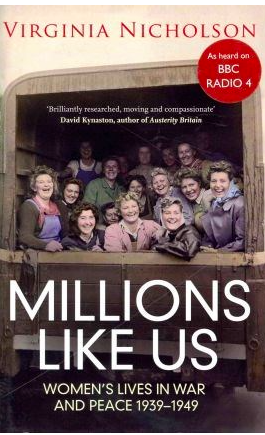
Millions Like Us: Women's Lives in War and Peace by Virginia Nicholson. I always love reading about the war on the home front. I've barely started this one so I hope to get back to it soon and really make a dent. I loved Nicholson's book Singled Out which I read a few years ago for the TBR Pile Challenge. 


In Morocco by Edith Wharton. I do love travel writing and Edith Wharton is one of my all-time favorite writers. I'd never read any of her nonfiction before but this is available for a free e-book download so I've had it on my phone for awhile. I started reading it the other day while on line in the post office and it's very good. I've always dreamed of visiting Morocco so this should be a win-win. I only wish there were images of her travels! 


The Omnivore's Dilemma by Michael Pollan. This is the November selection for a book group I recently joined at my library so this fits in well with my fall reading plans! I really want to read this one because I have not finished the last two book selections for the group -- I fear I may get kicked out if I don't finish the next one!


Frauen: German Women Recall the Third Reich by Alison Owings. I found this on the the shelves of my library over a month ago and haven't touched it. Our library doesn't have a huge selection but there's a lot of books about WWII. This would be a really nice contrast to Nicholson's book about the British home front.


The Art of the English Murder by Lucy Worsley. There are few things I love more than a great murder mystery, and the English do it so well. Sounds perfect for reading on a chilly November evening. 

Of course I have lots more nonfiction books on the TBR shelves (and my TBR list!) but if I get all five of these read in the next month I'll be really pleased with myself. 

Bloggers, anyone else reading nonfiction in November? What are you reading? And do you recommend any of these? Please let me know in the comments!